
Build a real demand baseline
Headcount is a potential audience, not daily attendance or a one-drink-per-person rule. Record attendance, actual coffee users, drinks per user, visitors and training events by location and time. Observe a complete working week and identify all-hands meetings and concentrated return-to-office days separately from the average.
Machine counters show preparations; observation reveals queues, abandoned attempts and remakes. Keep those measures distinct. Separate black coffee, milk drinks, decaf, hot water and cup sizes so that a rare request does not silently become a mandatory feature.
Use three scenarios instead of a headcount multiplier
The following is an invented planning exercise. Of 80 employees, 56 attend on an ordinary day; 42 drink coffee twice, with six visitor drinks, giving 90 drinks. None of those participation assumptions should be transferred to another office. Estimate the busiest 15 minutes separately from the daily total.
Where evidence is weak, arrange a loan trial or manual observation. A provisional four-minute maximum wait may be a useful project target, but is not an industry standard. Faster preparation alone may not improve experience if replenishment or a confusing menu repeatedly interrupts service.
| Assumed scenario | Daily calculation | Peak test |
|---|---|---|
| Ordinary day | 42 × 2 + 6 = 90 drinks | 24 in 15 minutes; 14 with milk |
| Concentrated attendance | 60 × 2 + 10 = 130 drinks | 36 in 15 minutes; 22 with milk |
| Training day | 90 regular + 30 event = 120 drinks | 30 requests arrive at the start of a break |
Choose station layout from the queue, not the floor plan alone
A central machine suits nearby users, spread-out demand and clear care ownership. More stations can shorten walks and distribute arrivals, but add cleaning locations, stock and inspection rounds. Two machines do not automatically double service capacity if they share a narrow cup area, one replenishment worker or a common failure point.
Map cup collection, selection, dispensing, additions and departure. Move cups and condiments so completed users can leave the dispensing area, then retest before adding equipment. Consider separate hot water where it creates a real bottleneck, subject to its own installation and care requirements.
Use product specifications as evidence, not an office guarantee
The UK JURA X10 INTA page distinguishes a daily recommendation from hourly figures for particular beverages. Those definitions matter; they do not promise performance for your mixed office menu. Official specifications. Demonstrate each candidate using your intended recipes, cups and arrival sequence.
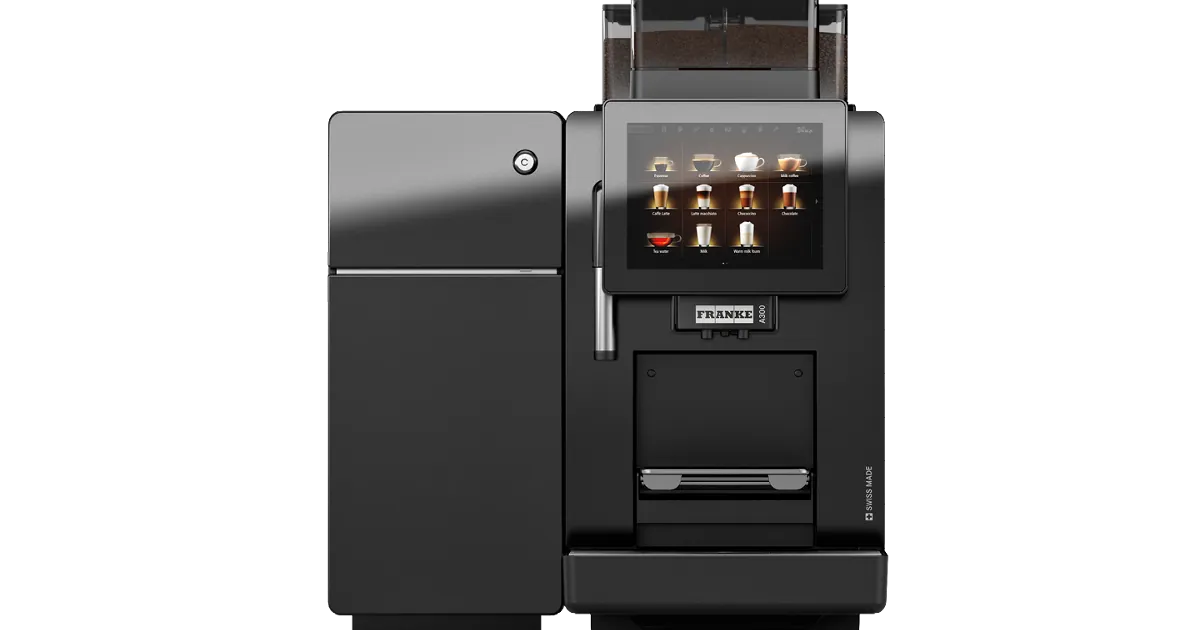
The UK Franke A300 page lists milk cooling and payment add-ons separately. Confirm which demonstration accessories and functions are actually quoted, and include them in the footprint. For connected options, identify the account owner and ask what remains available during network loss.
Fit water and ingredients to staffed maintenance windows
For a tank system, include the walk to the water point, handling, refill interruption and waste disposal. A mains system needs site permission, the correct installation drawing and a treatment plan. Nominal tank litres divided by cup volume do not establish uninterrupted drink count: rinsing, cleaning and usable capacity also matter.
Schedule inspection of beans, milk, grounds and drip tray while someone is present; log real intervals between interventions. A low-volume second bean or milk choice still requires rotation and care. Clearly identify ingredients on the menu and do not promise separate internal drink paths unless that exact configuration has been checked.
Assign administration, cleaning staff and supplier responsibilities
Name owners and substitutes for opening checks, replenishment, cleaning and fault reporting. “The cleaners will do it” is insufficient if their shift ends before the last milk drink or supplies are locked away. Have the real operator complete a model-specific demonstration using official cleaning resources.
Ask for supply names, pack sizes, dose per routine and ordering lead times, then set reorder points from actual use. Document service coverage at the address, reporting channels, weekend arrangements and a backup drink route. A single-machine office needs a workable interruption plan, even if that plan is temporary alternative drinks.
Decide quantity and budget after the trial
Agree a trial that covers an ordinary day and a concentrated-attendance day. Log availability, longest wait, abandoned attempts, replenishment, active cleaning minutes and ingredient use. Reconcile counters with stock movements, allowing for remakes and cleaning waste before estimating cost per served drink.
Include users, daily-care staff and the site installer in acceptance. If congestion happens only on event days, compare event catering or staggered breaks with a permanent extra machine; recurrent daily congestion warrants a configuration or station-count review. Avoid buying from headcount, judging only the first drink, or treating automatic cleaning as ownerless maintenance.
Take these questions to a supplier
- What are our 15-minute order patterns for ordinary, attendance-peak and event days?
- How do central and distributed stations compare on walking, waiting and care labour?
- Which cooling, water, payment and reporting options are in the quotation?
- Who cleans after the last milk drink, including cover for absence?
- How will the trial determine station count, stock reorder points and local service commitments?
Sources & scope
Separately labels recommended maximum daily output and hourly output by beverage and single/double preparation; reference example, not a mixed-menu service guarantee.
Checked Oct 08, 2026A300 EasyClean and separate cooling/payment add-on options; not evidence of a particular office throughput or a complete installed quotation.
Checked Oct 08, 2026Official cleaning videos, cleaning products and safety-data resources; individual routines must be matched to the selected configuration.
Checked Oct 08, 2026