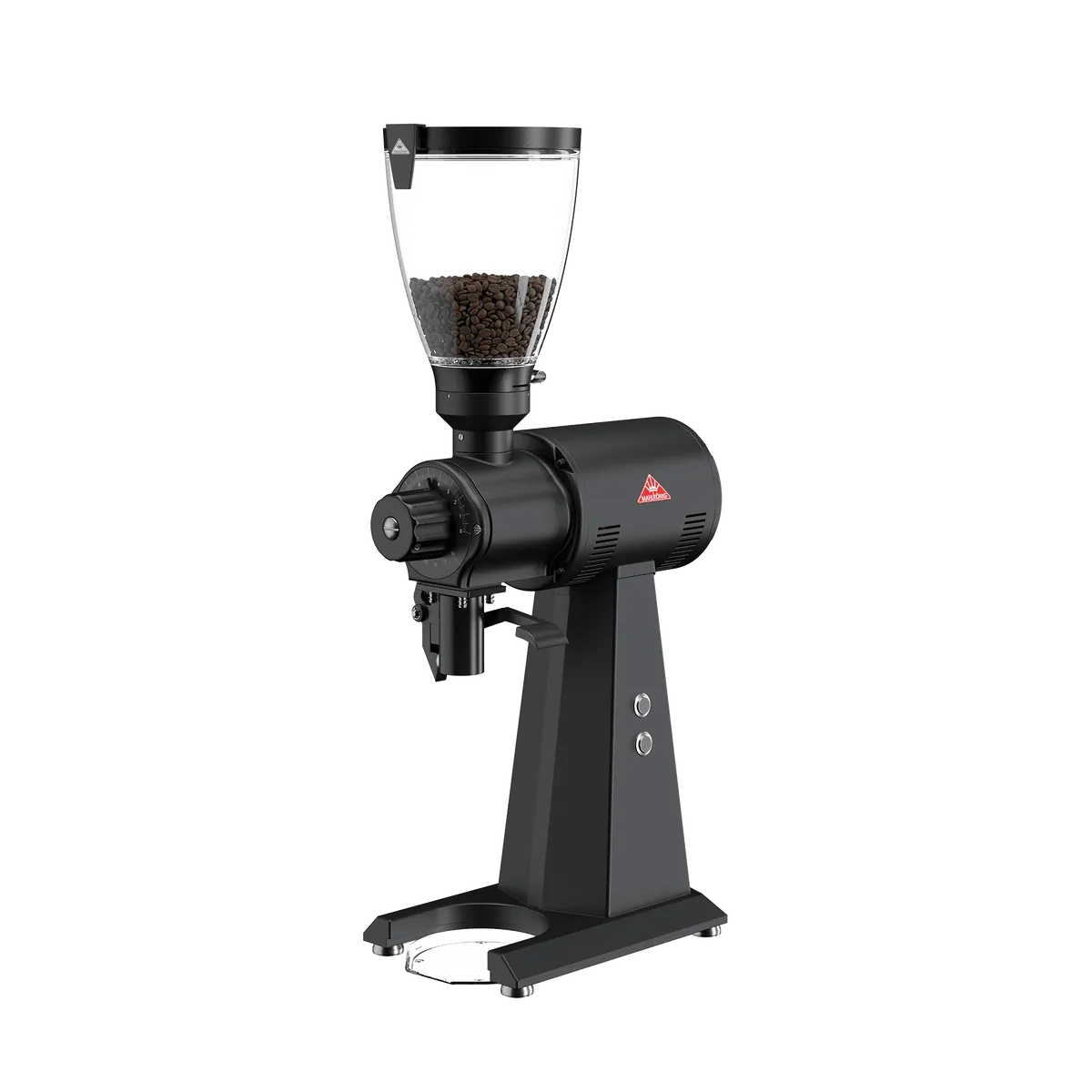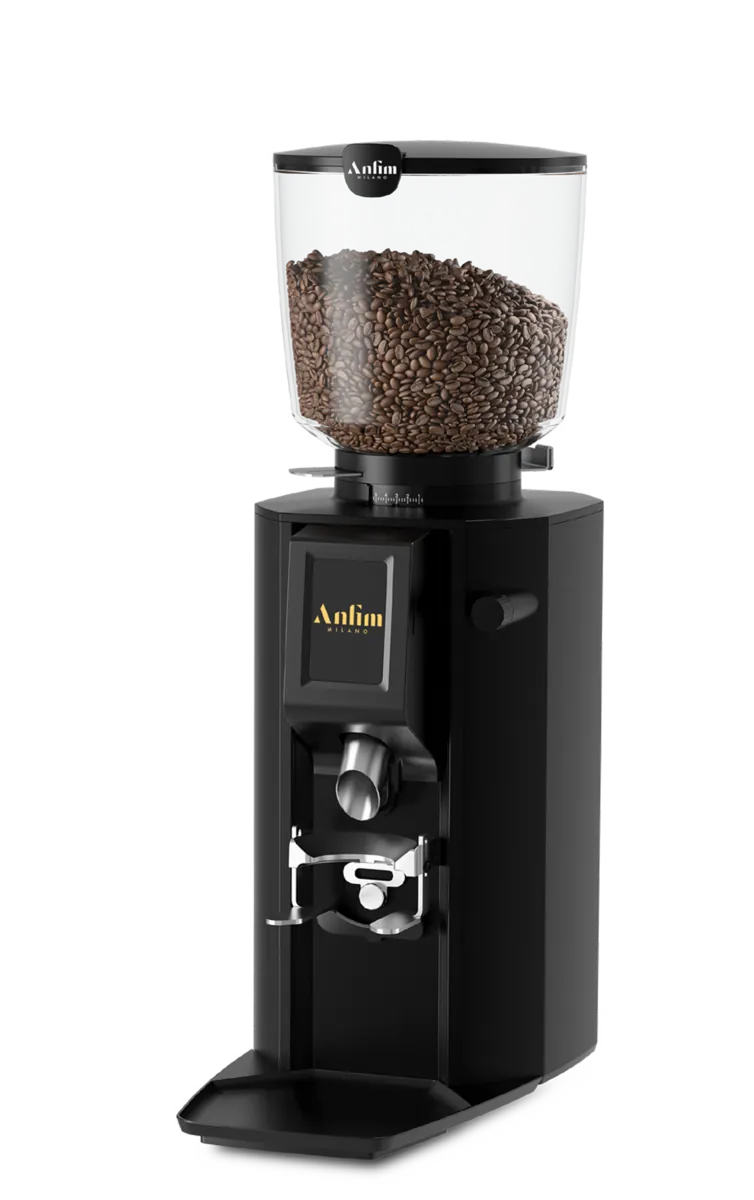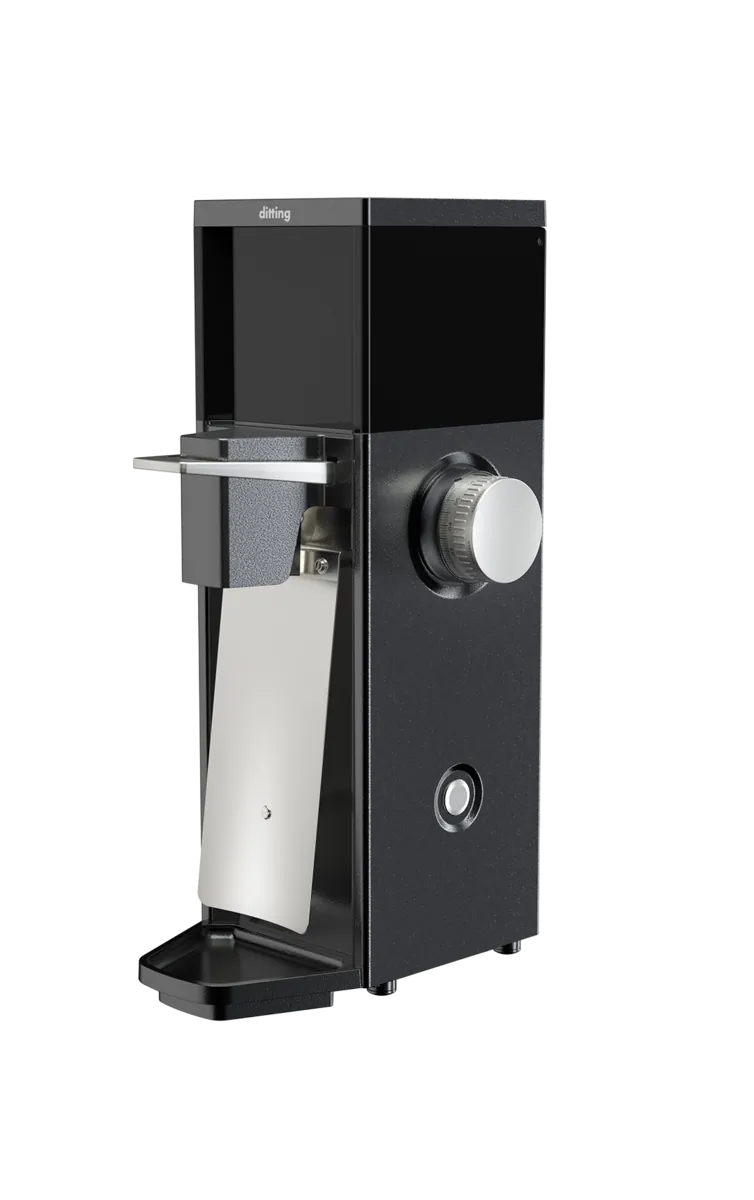
Define three different jobs before comparing burrs
An espresso station must place a dose in a portafilter and connect smoothly with distribution, tamping and extraction. Filter preparation needs batch weighing and handover; retail bags add containers, customer grind preferences and larger consecutive loads. Record the share of each task, dose sizes and daily bean changes before selecting a grinder type.
The main blend, decaf and single origins need not all share one machine. A low-volume option can use a separate workflow, but verify changeover time and handling of previous grounds rather than promising zero carryover. Fine grinding capability alone does not establish a suitable spout, fork or dosing workflow for a busy espresso bar.
Read capacity with its conditions
Burr diameter, material, speed and electrical version describe aspects of design; none independently proves flavour or sustained service capacity. The EK43 page conditions output on material, fineness and laboratory measurement. Compare grams per second only with those conditions understood.
Confirm that burr version, coffee, target setting and supply frequency in the demonstration match the quotation. Keep different burr configurations separate. Ask for the original definition of a published rate and verify performance with your own recipe; coarse bulk output is not evidence of fine espresso-dose speed.
Choose dosing control by the complete operation
Time-based dosing needs its timer setting checked against actual mass when the recipe changes. Weight-based control can reduce manual stopping decisions, but still needs verification of delivered mass, portafilter fit, stable placement and errors. Single dosing supports frequent bean changes but adds weighing and loading actions. Compare the full cycle, not only motor runtime.
The E65S GbW page illustrates weight-based dosing but is marked Legacy, so it is not presented here as a currently available recommendation. Have actual staff use their real portafilters and check visibility, handling and how unintended setting changes are detected.
Worked example: convert drinks to coffee mass without inventing throughput
Assume 150 espresso doses/day at 18 g: 2.7 kg of recipe coffee. Add an invented 0.15 kg/day allowance for dialling-in and post-cleaning purging, giving 2.85 kg/day or 74.1 kg over 26 days. Replace the loss allowance with trial records; it is not a standard grinder waste rate.
A hypothetical 15-minute peak of 30 doses needs 540 g. Even an assumed net rate of 4 g/s gives only 135 seconds of motor time, not 135 seconds to finish the drinks. Receiving grounds, adjustment, portafilter circulation, preparation and service must be included in a real order script.
| Assumed task | Calculation | What it does not establish |
|---|---|---|
| Daily recipe coffee | 150 × 18 g = 2.7 kg | Dial-in, carryover or remake losses |
| Additional allowance | 0.15 kg/day; total 2.85 kg/day | A model-specific waste rate |
| Monthly plan | 2.85 × 26 = 74.1 kg | A burr-life commitment |
| Peak mass | 30 × 18 = 540 g; assumed 4 g/s gives 135 s | Complete bar service time |
Record dose and sustained-work tests
With the same beans, dose and extraction target, have the supplier dial in normally and record ten consecutive target masses, actual masses and grinding times. Ten is this trial’s sample plan, not a certification standard. Keep minimum, maximum and every raw result alongside the average so occasional deviations remain visible.
Then run the real peak sequence, recording readjustments, alarms, required pauses and drinks against pre-agreed recipe and sensory criteria. Include a normal idle period and restart. Buyer, coffee team and supplier should agree acceptance boundaries before seeing results rather than shifting them afterwards.
Include changeover, cleaning and replacement
Test a main-blend-to-decaf change and the return, weighing adjustment/purge losses and timing the complete operation. Where switches are frequent, compare a dedicated second grinder with repeated changeovers, including space. Allround capability does not make switching costless.
Use the exact manual to distinguish user care from technical service. The E65S GbW manual separates cleaning, burr maintenance and scale calibration; its procedures and intervals are not reproduced as universal advice. Request exact burr, spout and wear-part numbers, prices, lead times and local replacement arrangements.
Accept the whole bar and validate the fallback
Have regular staff practise portafilter placement, dosing, weight checks, handover and cleaning. Check hopper access, screen visibility, noise during ordering and space for bags or receiving containers, not only the base. Specifications become useful when grinder, machine and staff work together.
Retain burr version, settings, beans, order script and maintenance records. A backup intended for another task only counts after it can perform essential recipes. Avoid ranking taste by burr diameter, peak capability by one fast dose, replacement dates by a kilogram figure alone, or ignoring decaf and single-origin changeover work.
Take these questions to a supplier
- Is this configuration for espresso doses, filter batches or retail bags, and how often will it change tasks?
- Which beans, fineness, burrs and electrical conditions support the output figure?
- Do our portafilters work reliably, and what do the raw consecutive-dose records show?
- How much time and coffee do changeovers, idle restarts and post-cleaning setup consume?
- What are the part numbers, lead times, local service and validated backup workflow?
Sources & scope
Grinding-output figures depend on material, fineness and laboratory conditions; no rate is adopted as a shop guarantee.
Checked Oct 08, 2026Weight-controlled dosing example and explicit Legacy status; not a current-availability recommendation.
Checked Oct 08, 2026Distinct cleaning, burr-maintenance and scale-calibration topics; no disassembly instructions or model-specific intervals are generalized.
Checked Oct 08, 2026