List tasks before pricing a bottle
Separate the coffee circuit, milk system, removable external parts, hopper, water or drip tray, cooler and workstation. Distinguish routine cleaning, condition-triggered maintenance, cartridge replacement and professional service. Frequency must come from the selected configuration’s instructions, not a universal daily or monthly rule.
For each task record its trigger, owner, permitted supplies, dose, time and completion evidence. Counters, calendar intervals and inspection may all apply. Ask the supplier where instructions are unclear; do not combine unrelated procedures or increase chemical concentration to improvise a solution.
Measure automation with two clocks
Time active work separately from machine unavailability. Active work includes fetching supplies, preparation, component handling and finishing. If staff can do other work during an automatic cycle, do not count the entire cycle as labour, but retain its service interruption.
Record how often the operator must return to acknowledge a prompt. A short active total with repeated interruptions may be difficult for a lone worker. Have the actual employee complete a second supervised routine rather than using the salesperson’s fastest demonstration as the long-term staffing allowance.
Do not substitute rinsing for cleaning or descaling
These tasks have different purposes and triggers. In the applicable X10 EA/SA/INTA JURA manual, automatic milk rinsing and daily cleaning after milk use are distinct. This is a model-specific example, not a schedule for every machine.
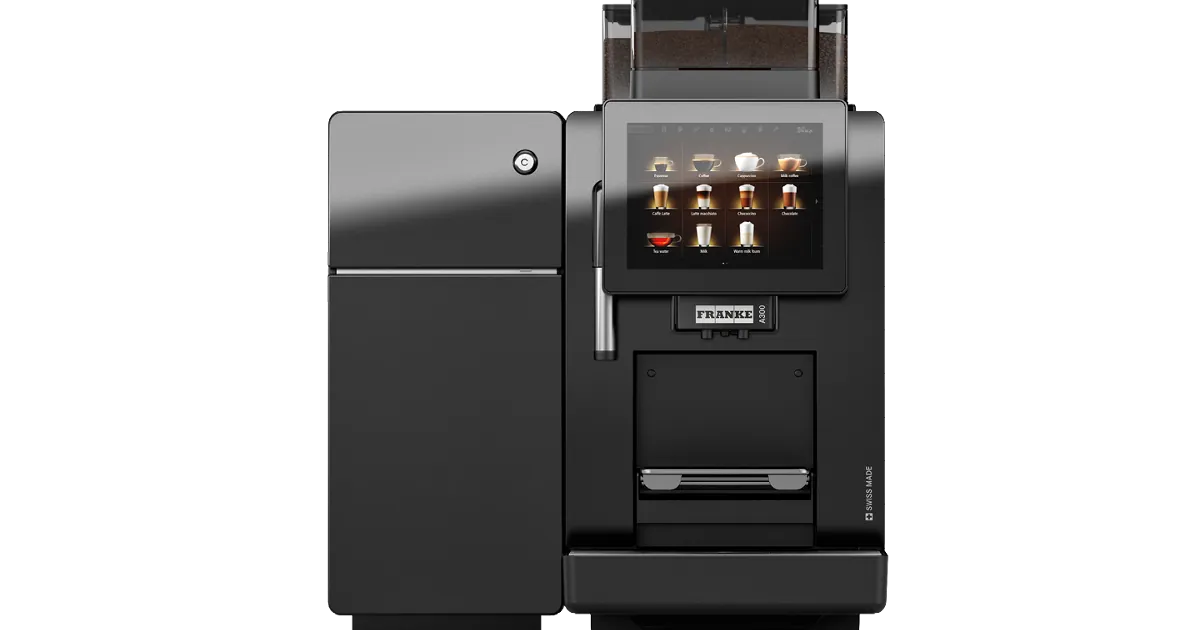
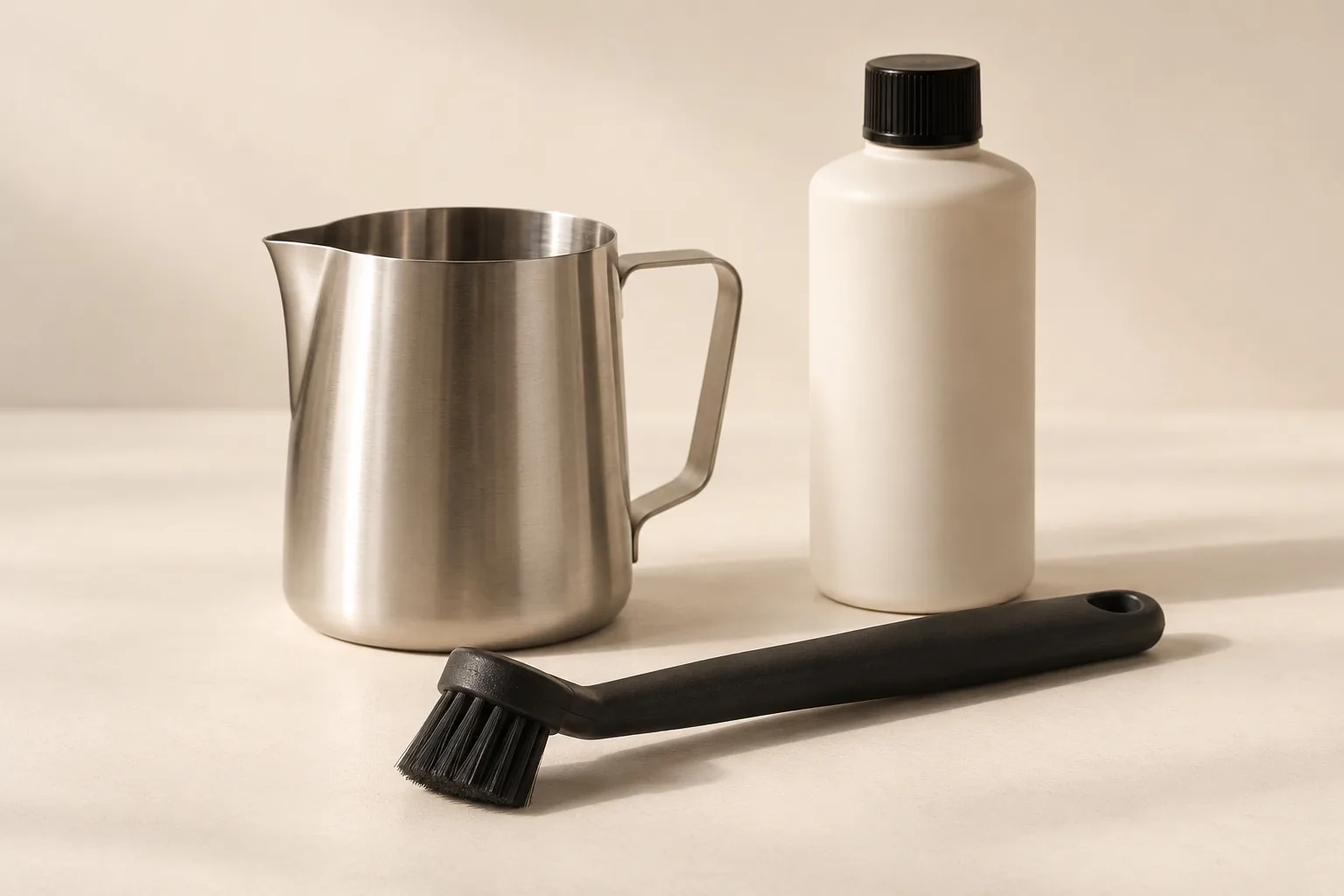
Request exact supply names, part numbers, pack quantities and doses, and verify compatibility with the selected program. Franke cleaning resources link products and safety information. This article does not replace instructions or provide chemical mixing, wiring or disassembly procedures.
Worked example: construct a monthly cost model
Every number below is invented, in CNY, and is neither a supplier quotation nor measured equipment performance. Assume 26 operating days, 100 served drinks/day, 14 active cleaning minutes/day at CNY45/hour, CNY3 daily cleaning supplies, and monthly budget allocations of CNY60 for filters and CNY90 for planned service. The subtotal is CNY501, approximately CNY0.19 per served drink.
This excludes capital, coffee and milk, energy, water, transport and failure losses. The filter allocation is a budgeting assumption, not monthly replacement. Replace it with actual prices and applicable replacement conditions. At 20 active minutes/day with other inputs unchanged, the subtotal becomes CNY618: measure labour before judging an automation option.
| Assumed cost | Calculation | Monthly CNY |
|---|---|---|
| Active cleaning labour | 14 ÷ 60 × 45 × 26 | 273 |
| Cleaning supplies | 3 × 26 | 78 |
| Filter allocation | Assumed monthly average | 60 |
| Planned service allocation | Assumed monthly average | 90 |
| Total / served drinks | 501 ÷ 2600 | 501 / approximately 0.19 per drink |
Track consumption and set a reorder point
Compare cost per correctly completed routine, not just price per bottle. Pack size, program dose and frequency can change the result. Reconcile opening stock, receipts and closing stock. Investigate repeat routines, leakage, dosing and record errors before attributing unexplained consumption to equipment efficiency.
For filters, ask the supplier to enter the applicable cartridge conditions, replacement trigger and actual water-use records in the same ledger. Do not divide a maximum advertised volume by drink count and call it a replacement plan. A practical reorder model is forecast consumption during lead time plus an explicitly chosen buffer; name the stock owner and cover for absence.
Quote service scope and interruption separately
Ask which preventive-service labour, parts, travel and checks are included, whether consumable components cost extra and how out-of-hours work is priced. Identify whether intervals follow counts, instructions or contract arrangements. Annual maintenance does not automatically mean all faults are free or immediate attendance.
Record when interruptions occur, alternative service and observed impact. Closing-time cleaning is not equivalent to a peak trading failure and should not be multiplied by the same assumed sales figure. Use documented trading data for transparent scenarios where available; otherwise state the recovery process and objective without invented financial precision.
Check whether the routine survives a real working week
During a trial, cover an actual roster cycle and log completion, operator, active minutes, supplies and unavailable periods. Verify ownership after the last milk drink and cover for weekends or leave. Supplies and service contacts should be findable by the relief operator.
Reconcile the task sheet with the quotation, removing double counting and adding omitted cooler or external-component work. Avoid equating rinsing with complete cleaning, counting all automatic runtime as labour, treating cartridge capacity as fixed life, or turning redeployable staff minutes into guaranteed cash savings.
Take these questions to a supplier
- Which cleaning, descaling, filter and professional-service tasks apply, and what triggers each?
- How much active work and unavailability occur, including return visits during the program?
- What are the supply part numbers, doses, pack sizes and lead times?
- Which labour, parts, travel and out-of-hours charges are excluded from service?
- What is missing from the cost model, and who checks stock and task completion?
Sources & scope
Model-specific distinction between automatic milk rinsing and daily milk-system cleaning after milk use; no program times or universal schedules adopted.
Checked Oct 08, 2026Links to cleaning products and safety information; no universal dose or labour time inferred.
Checked Oct 08, 2026